The real diagnosis
When a supplement does not deliver, there are two possible explanations, and people almost always reach for the wrong one first.
The first is that the product did not do much. Possible, and sometimes true.
The second is that it was never taken consistently enough to find out. Far more common, and much less comfortable to sit with — which is precisely why it gets skipped in favour of blaming the formula and buying a different one.
The reason this matters is that most botanical formulas are designed around a 90-day arc. If your actual compliance was 55 per cent across ten weeks, you did not run a fair test. You ran a different, weaker protocol and then drew a firm conclusion from it. And the next product will meet the same fate, because nothing about the underlying routine has changed.
Anchor it to something you already do
Habits are not built on motivation. They are built by attaching a new action to an existing one that already runs automatically.
The strongest anchors share three features: they happen every single day, at roughly the same time, in the same physical location. Breakfast is the best anchor most men have. Making coffee is a close second. Brushing your teeth works well if the supplement can be taken without food.
The mechanism to aim for is: after I pour my coffee, I take my capsule. Not "I'll take it in the morning" — that requires a decision every day, and decisions are exactly what fails when you are tired or rushed. The anchor removes the decision.
One caution: if your supplement should be taken with food, do not anchor it to something that happens before food. Anchor it to the meal itself.
Visibility beats memory
Where the bottle lives predicts compliance better than how much you care about the outcome.
A bottle in a bathroom cabinet behind the shaving foam requires you to remember it. A bottle sitting next to the kettle, in your line of sight at the moment the anchor happens, requires nothing at all. Same bottle, entirely different rates of use.
Practical steps that work:
- Put the bottle where the anchor happens, not where supplements "should" go.
- If you travel regularly, keep a second small container permanently in your bag so packing is never a step.
- Do not decant into an unlabelled pill organiser. Lot codes and expiry dates matter, and organisers add a weekly refill chore that itself gets skipped.
- If a phone alarm helps, set it for the anchor moment rather than a round hour.
Almost every failed supplement routine has the same postmortem: the bottle stopped being visible, and about nine days later the routine stopped existing.
Buy past the decision point
There is a specific moment at which most routines end, and it is not a moment of weakness. It is the morning the bottle runs out.
At that point the habit stops being automatic and becomes a decision again — reorder, wait for delivery, restart. Even a four-day gap is usually enough to break the anchor. And the reorder decision arrives at the worst possible time, around day 30, before a botanical formula has had a chance to show much.
The straightforward fix is to buy enough supply to cover the full arc in one purchase. A 90-day supply removes one reorder decision; a 180-day supply removes several and typically lowers the per-day cost as well. This is not about spending more — it is about not placing a decision point in the middle of the window that matters.
Plan for the bad week
Every three-month stretch contains at least one genuinely disrupted week. Travel, illness, a family crisis, a deadline that eats the mornings. The routine will be interrupted. That is not a failure of character; it is a normal feature of a normal life.
What separates routines that survive from routines that end is entirely what happens next.
The rule worth adopting is simple: never miss twice. One missed day is noise. Two missed days is the beginning of a new pattern. If you miss Tuesday, the only thing that matters is taking it on Wednesday — not making up the dose, not restarting a counter, not feeling any particular way about it.
Also worth deciding in advance: do not double up after a missed day. With a once-daily formula there is no benefit and it introduces a new decision where none is needed.
Measure the right thing
Most men assess a supplement by trying to recall how they have felt, which is close to useless. Memory of energy and mood is heavily coloured by how you feel at the moment of recall.
Two better options, both cheap:
- Track compliance, not sensation. Mark an X on a calendar each day you take it. At day 90 you will know whether you ran the protocol — which is the precondition for any judgement about the product.
- Pick two or three objective markers. Reps at a fixed weight, resting heart rate on waking, hours slept, or a single 1-to-10 energy score logged at the same time daily. Write them down on day one, day 30, day 60 and day 90.
Objective markers matter because subtle improvements are invisible from the inside. Change that accumulates over eight weeks becomes your new normal, and your new normal is what you compare against. Only the day-one note tells you the truth.
A 30-day setup
- Day 1: choose your anchor, put the bottle there, write down two or three baseline markers.
- Days 1–14: mark a calendar daily. The only goal is the streak, not the sensation.
- Day 15: if compliance is under 80 per cent, change the anchor rather than trying harder.
- Day 30: re-check your markers against the baseline. Do not rely on memory.
- Day 60 and 90: repeat. Judge the product at 90, not before.
Making the routine as small as possible
Everything above works better when the action itself is smaller. A protocol requiring six capsules across two doses has more surfaces for a bad week to attack. One capsule, once daily, with a meal you were going to eat anyway is about as small as the action gets.
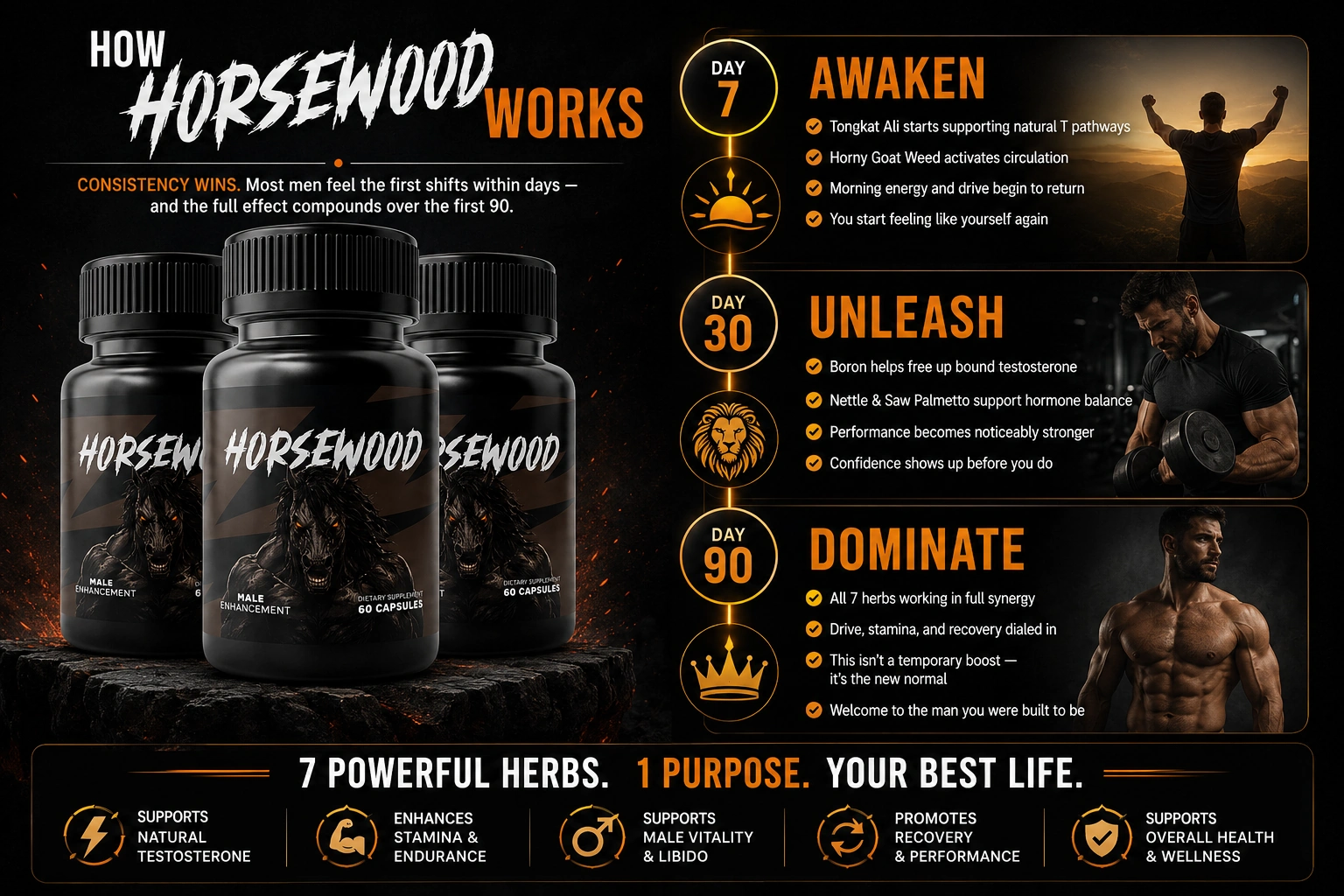
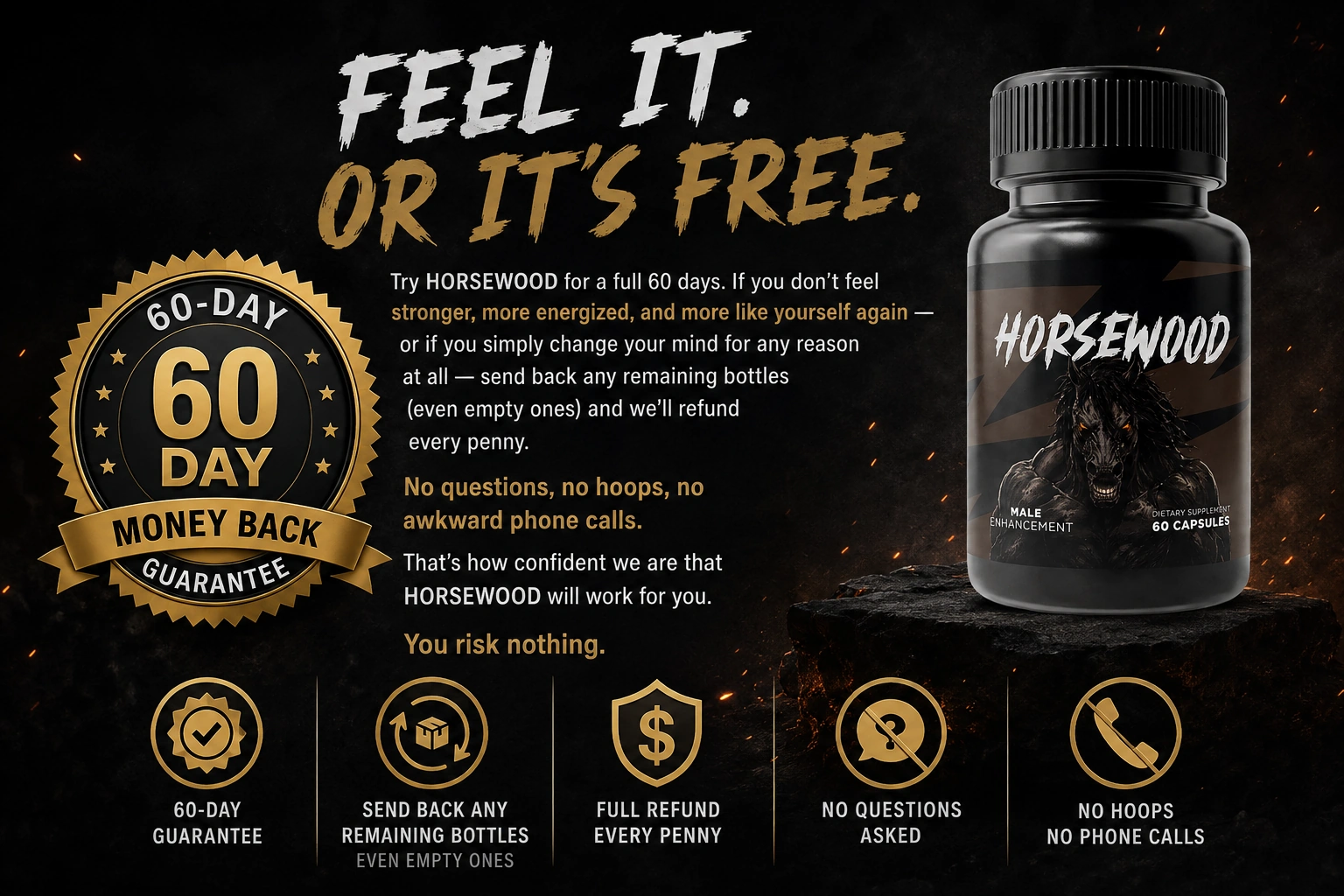
That is the design logic behind Horsewood: a single capsule taken each morning with an 8 oz glass of water and food, with no second dose, no loading phase and no cycling schedule. The 60-day guarantee — with empty bottles accepted — exists for the same reason, since a guarantee that requires unopened bottles quietly discourages the consistency the formula depends on.
Build the routine first. The formula only gets to matter once the routine holds.

One capsule. Seven botanicals. Zero stimulants.
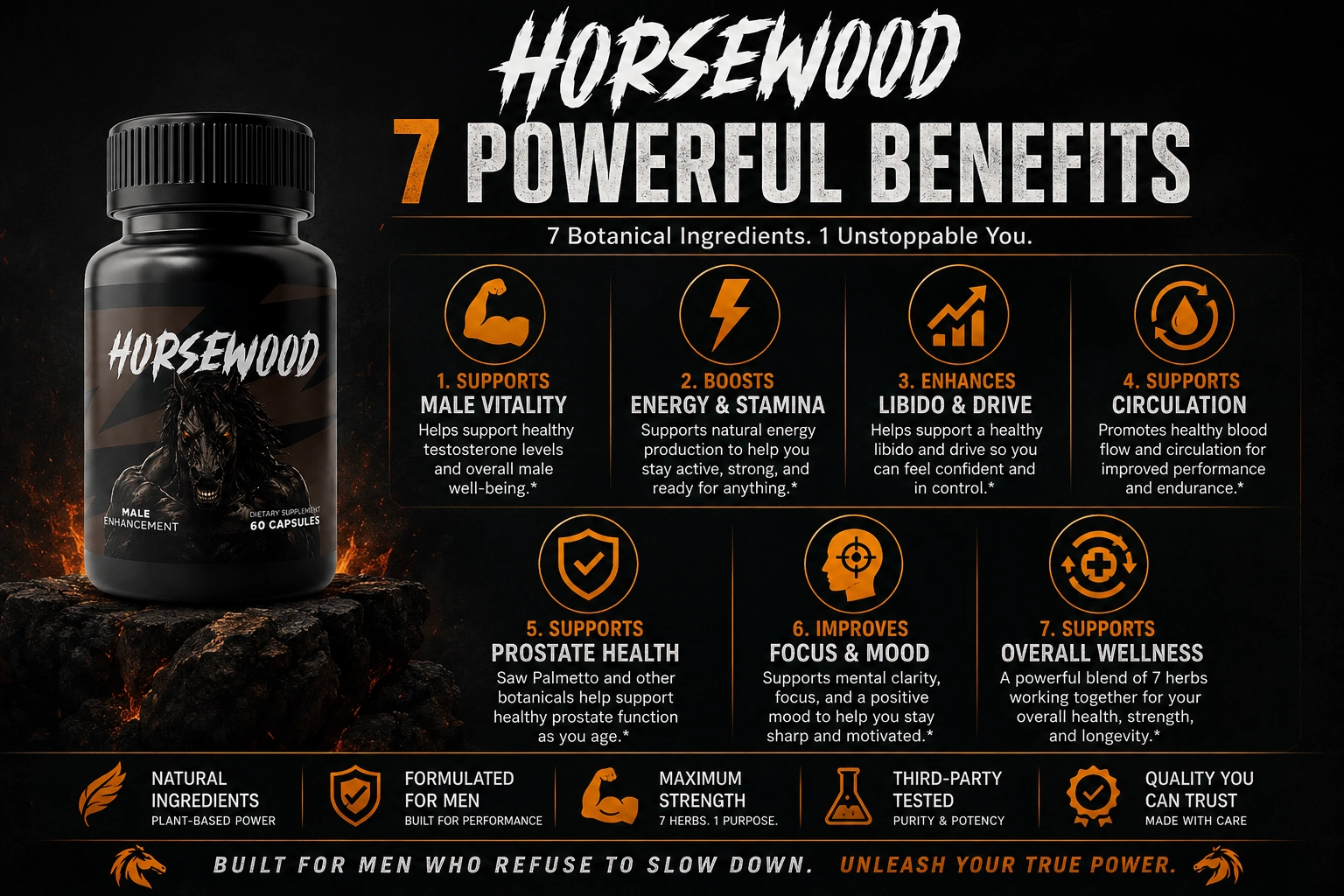
Horsewood is a once-daily botanical supplement formulated to support male vitality as part of a healthy lifestyle — with 1,000mg of Tongkat Ali, no stimulants and no subscription.
Order HorsewoodOne-time purchase · 60-day money-back guarantee · Free US shipping on the 6-bottle pack
Frequently asked questions
In most cases they did not stop working — the routine broke. Compliance below roughly 80 per cent across a 90-day arc means the intended protocol was never really run, so the product cannot be fairly judged.
Whichever time you will actually keep. Mornings tend to be the most reliable because they are the most structured part of the day, and anchoring the capsule to breakfast attaches it to something that already happens automatically.
Take your next capsule at the usual time and do not double up. The rule that matters is never missing twice in a row — one missed day is noise, two is the start of a new pattern.
Ninety days of consistent use is a reasonable minimum for a botanical formula, since most support accumulates over weeks rather than appearing immediately. Track objective markers at day one, 30, 60 and 90 rather than relying on memory.